
Guide2023-04-26
Ants in the kitchen: how they follow a trail, and where to break it
Ants find your kitchen by following scent trails laid by other ants. Knowing how the trail works tells you where a treatment does its job.
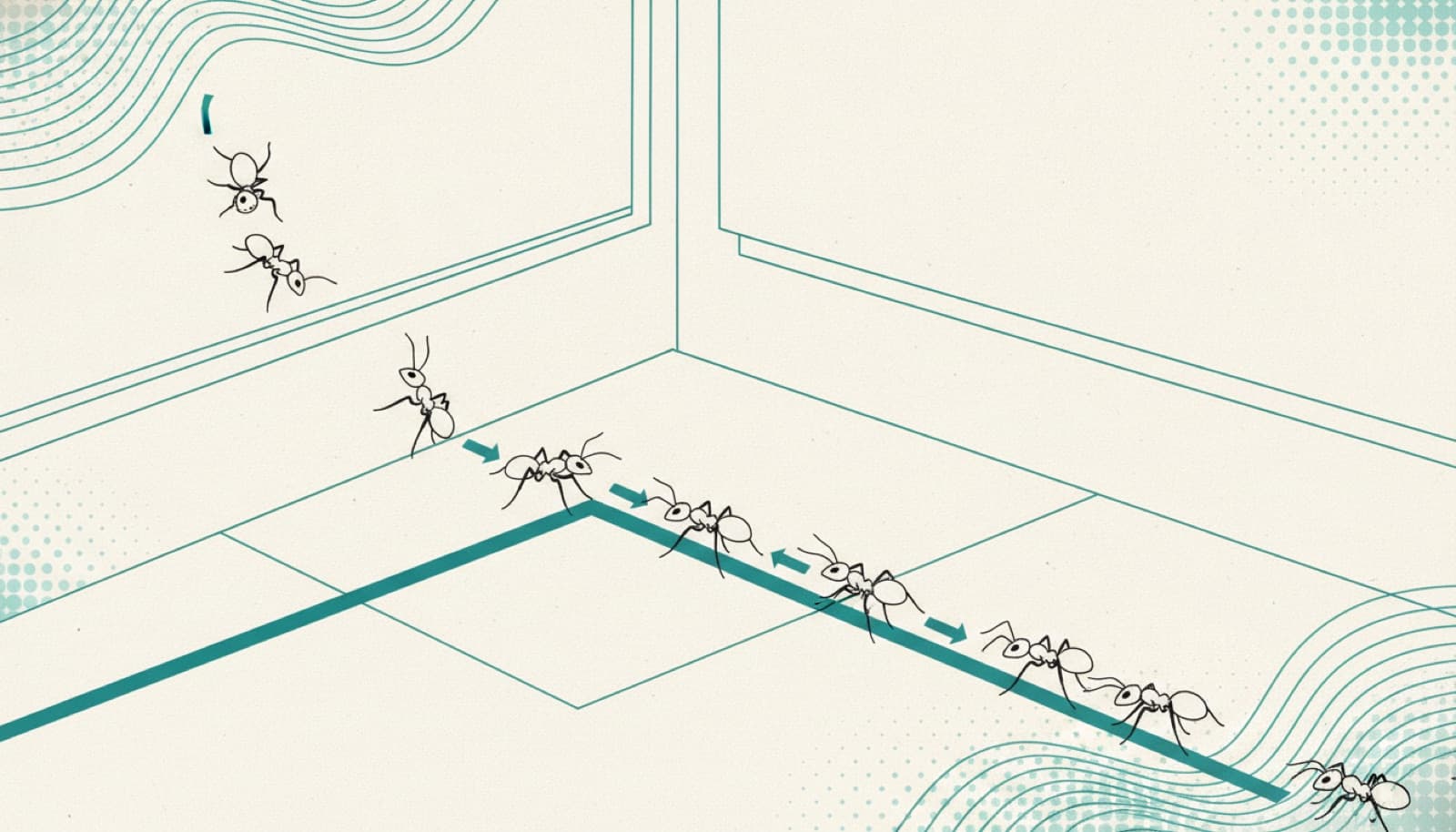
A line of ants across the worktop on a warm evening is usually the first sign. Before reaching for a spray, it helps to know how they found the kitchen in the first place.
How ants follow a trail
Ants communicate with pheromones, chemical signals laid down by the ants ahead of them. They have no noses; they pick up the signals with their antennae, and they can follow a trail along straight lines, curves and zigzags.
Researchers at Harvard have studied how ants detect and follow pheromone-marked paths. Ants use several strategies, probing and exploring as they go, and individuals differ in how persistent they are. For a kitchen the practical point is simple: the trail is the route, and a route can be interrupted.
What Repeltec does
Where to apply it in a kitchen
- Skirting boards and wall edges, where ants come in through small cracks and gaps.
- Window sills and door frames.
- Under and behind appliances, where it is dark and undisturbed.
- The edges of cupboards and pantry shelves, not the shelves where food stands.
- Around the sink and the waste bin, where moisture and crumbs collect.
Wipe the trail with soapy water first: it removes the scent line and gives the coating a clean surface to bond to. Keep the product off food preparation surfaces and anything food touches, and let it dry fully before the kitchen is used.
How long it lasts
The coating holds up best indoors, out of direct sunlight and in dry areas. Scrubbing an edge with detergent takes it off, so treat that edge again afterwards.
Once the traffic stops, seal the gap the ants were using. That is what ends the route.
Use biocides safely. Always read the label and product information before use.