
Guide2023-04-27
Cockroaches: a repellent surface treatment in professional pest management
Cockroaches in kitchens, food courts and schools challenge even experienced pest controllers. A repellent coating gives them another tool alongside baits and monitoring.
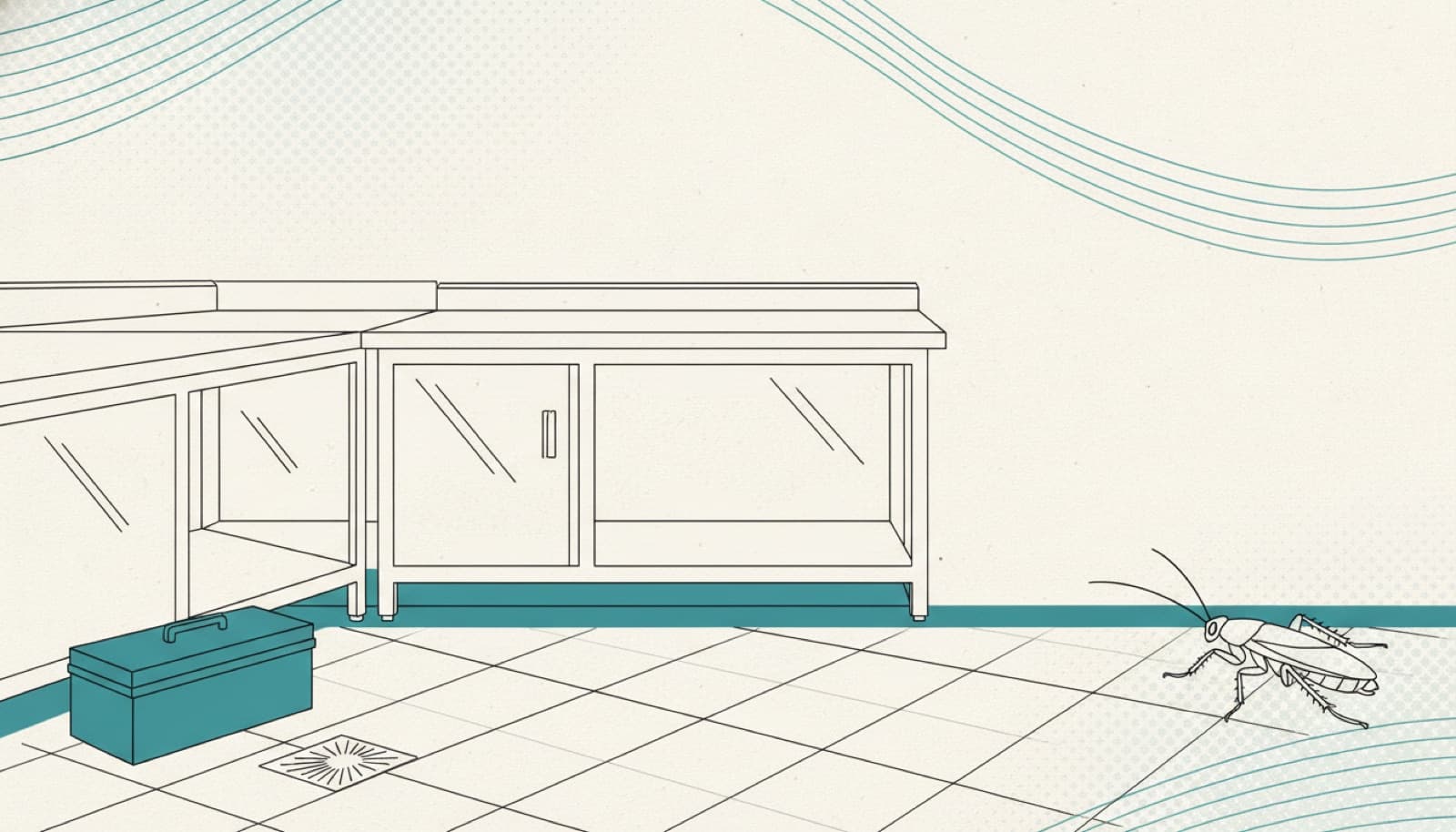
Cockroach infestations remain one of the hardest problems in kitchens, restaurants, grocery stores and schools. The usual tools, gel baits, residual insecticides and monitoring traps, work, but many residual products cannot be used in food areas or where people are present, and the insects come back from next door.
How Repeltec works
The formulation is water-based.
Where professionals use it
- Food courts: along the shared walls and service ducts between units, the routes cockroaches use to move from one unit to the next.
- Commercial kitchens: behind and under appliances and along wall junctions, away from food and food contact surfaces.
- Schools and other public buildings: kitchens, storerooms and service areas, treated while the rooms are empty.
Cockroaches are drawn to starch, sugar, grease, meat and cheese, and to the smell of rotting fruit and vegetables. A treated edge makes the routes to those sources less attractive. It does not replace baiting, and it does not clear an established infestation.
Housekeeping that discourages cockroaches
- Declutter: stacks of paper and cardboard give shelter, and even food.
- Wash dishes promptly. A sink full of unrinsed dishes is food and water.
- Store food in airtight containers.
- Take the rubbish out often; rotting food is a strong attractant.
When to call a professional
If cockroaches are already established, a pest control professional should assess the site and treat it. A repellent coating then fits into the programme as a preventive layer between visits, recorded like any other treatment.
Use biocides safely. Always read the label and product information before use.