
Guide2023-05-09
Insecticide resistance in mosquitoes: how it develops
Mosquitoes around the world are becoming less sensitive to the insecticides used against them. How resistance develops, and how it is managed.
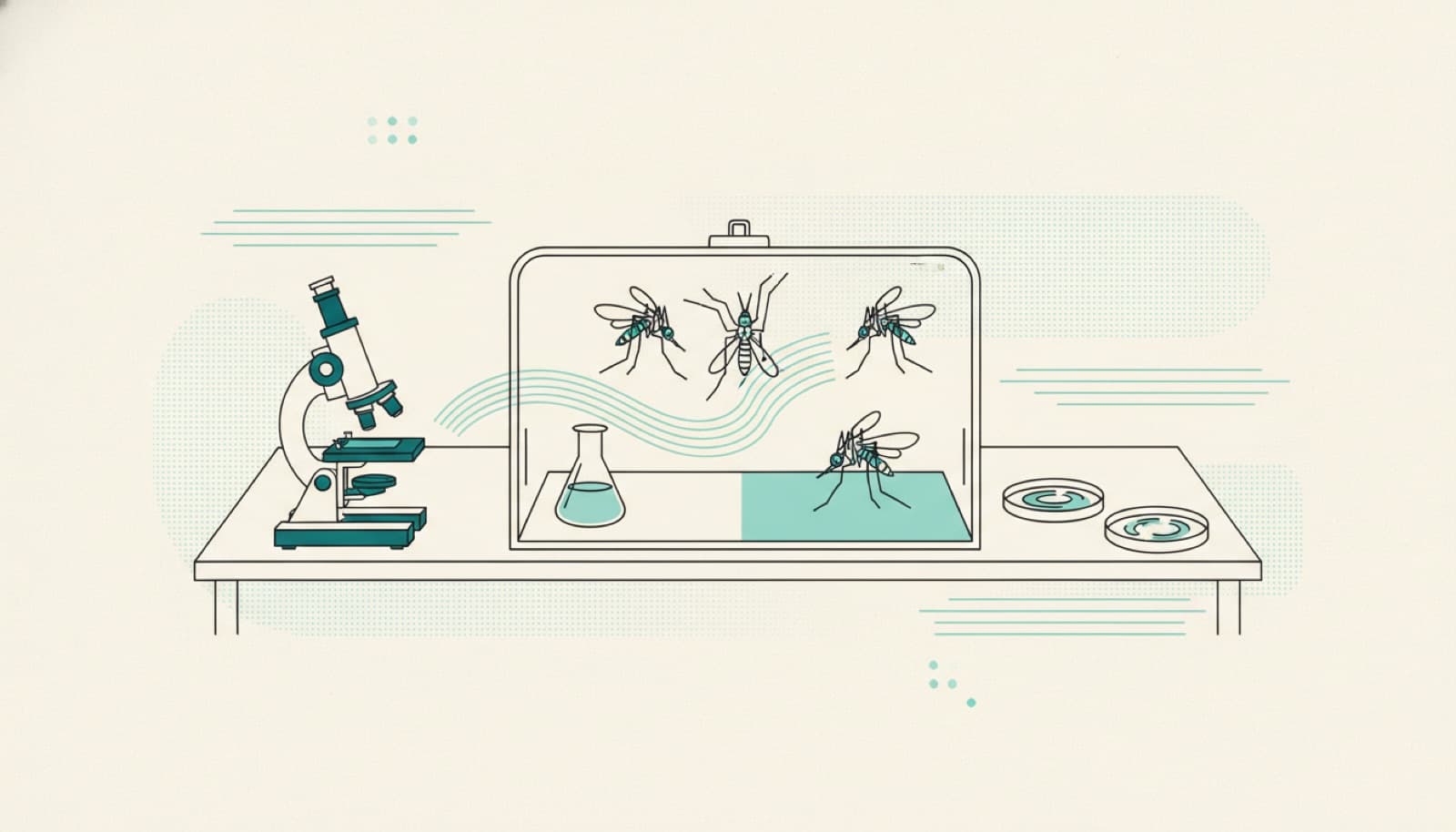
Mosquitoes have been controlled with insecticides for decades: treated nets, indoor residual spraying, sprays and coils. Around the world they are becoming less sensitive to those insecticides. Researchers have documented resistance in many regions and species, and public health programmes now plan around it.
How insecticides act on mosquitoes
- Pyrethroids, synthetic relatives of the pyrethrins in chrysanthemum flowers, hold open the sodium channels in the insect's nerves and cause paralysis. They are the main class used on treated nets.
- Organochlorines such as DDT act on the same channels at a different site. Their use has fallen sharply because they persist in the environment.
- Organophosphates and carbamates block the enzyme acetylcholinesterase, so the nervous system is overstimulated.
- Neonicotinoids mimic nicotine at the acetylcholine receptors. They are rarely used for residual spraying, but are discussed as partners in rotation.
What these classes share is the target: the insect's nervous system.
How resistance develops
Every time a population is exposed, the individuals that survive pass on whatever helped them survive. Over many generations the population shifts. There are three main routes.
- Target-site resistance: mutations change the protein the insecticide binds to, so it binds less well.
- Metabolic resistance: the insect makes more of the enzymes that break the insecticide down before it can act.
- Behavioural resistance: the insect changes when and where it feeds or rests, and avoids treated surfaces.
How fast this happens depends on how intensively and how often the same insecticide is used, on the genetic diversity of the population, and on what resistance costs the insect.
How resistance is managed
The standard response is to rotate or combine insecticide classes with different modes of action, so that resistance to one does not protect against the next. The Insecticide Resistance Action Committee (IRAC) groups insecticides by mode of action to support this. New active substances with new modes of action help as well, as do integrated approaches that use less chemistry overall.
A different kind of tool
A repellent acts on behaviour rather than on the nervous system, so it is a different tool from the insecticide classes above. It is not a substitute for public health programmes; where mosquitoes carry disease, follow local health advice.
Use biocides safely. Always read the label and product information before use.