
Guide2023-04-22
Ticks in Europe: where they are, and how to keep them off
Ticks are active from spring to autumn across most of Europe. Where you meet them, the checks that matter, and where a textile treatment fits.
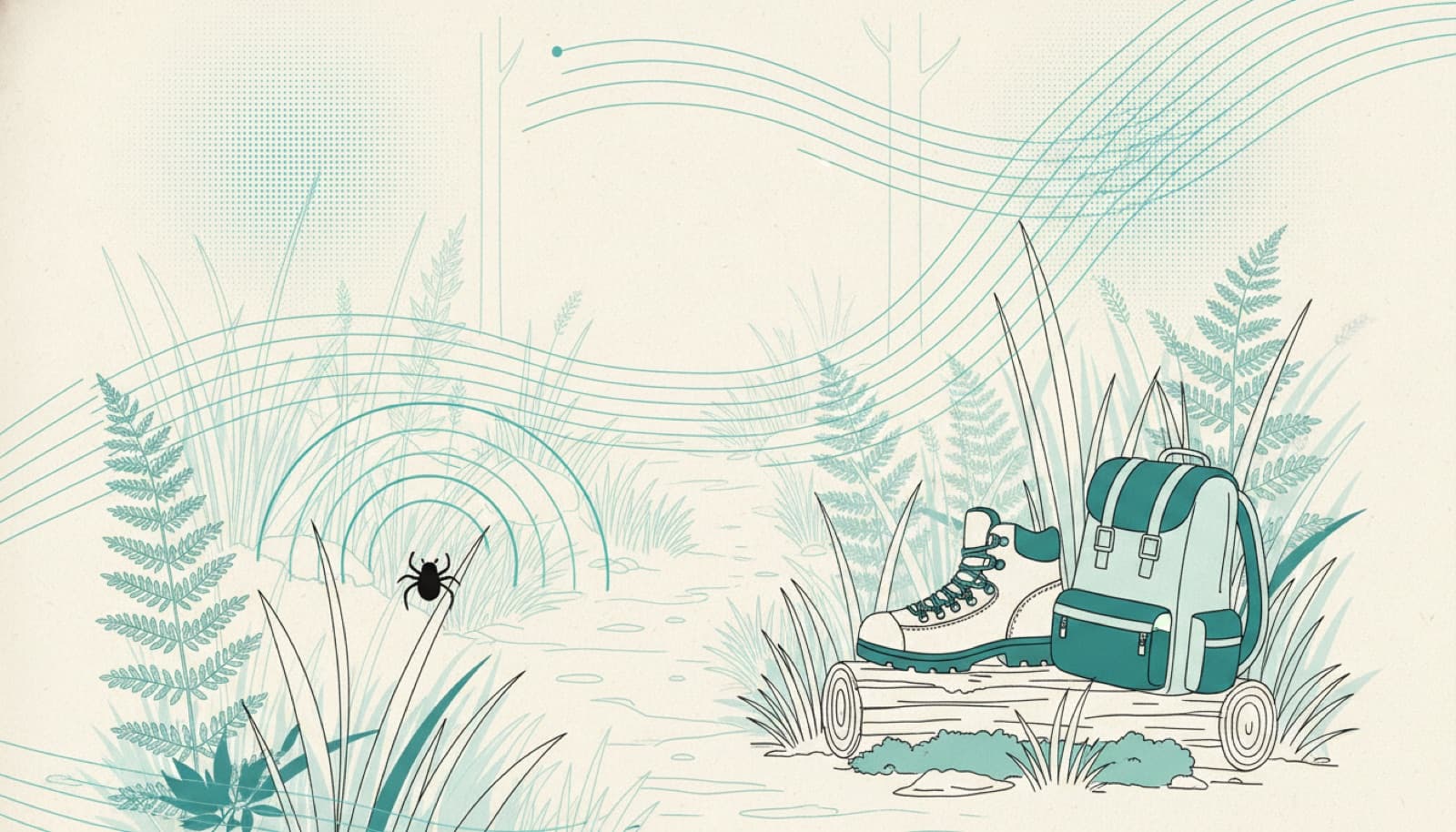
Ticks are small blood-feeding parasites related to spiders. In Europe the most common species is Ixodes ricinus, the castor bean or sheep tick, found from the United Kingdom and France to Germany, Austria, Switzerland and beyond. Ixodes persulcatus occurs further east.
Ticks can transmit infections to people and animals, among them Lyme disease and tick-borne encephalitis. That is why the checks below matter, and why a doctor should see any rash or fever after a tick bite.
Where and when
Ticks are most active in spring and summer, though they can be found all year. They wait on low vegetation in woods, forest edges, meadows and long grass, and they also turn up in urban parks and gardens.
Keeping them off
- Keep to paths where you can, and avoid brushing through long grass.
- Wear light-coloured clothing that covers arms and legs, tuck trousers into socks and wear closed shoes. Ticks are easier to spot on light fabric.
- Use a skin repellent on exposed skin, following its label.
- After time outdoors, check yourself, your children and your pets, including the scalp, behind the ears, the armpits and the backs of the knees.
- Remove an attached tick promptly with fine-tipped tweezers, gripping close to the skin and pulling straight out. Clean the bite afterwards.
- Check clothing and bags before you put them away.
Treating textiles
Ticks climb onto the textiles that touch vegetation: dog blankets, picnic rugs, tent floors, the hems of trousers. Treating those textiles is a practical step alongside the checks above.
Spray textiles until slightly damp and let them dry fully before use. Do not spray clothing while you are wearing it, and do not apply the product to skin or to animals. Treat again after washing.
Use biocides safely. Always read the label and product information before use.